
In-house work · Gwynnie Bee (CaaStle, Inc.)
AI-Powered Fit Technology: Driving 38% Performance Lift Through Strategic UX Innovation
Strategic UX innovation on AI-powered fit technology — pairing machine learning with human-centered design for a 38% performance lift.
- Organization
- Gwynnie Bee (CaaStle, Inc.)
- Role
- UX strategy & innovation lead
- Project type
- Product innovation
- Business category
- B2C subscription platform
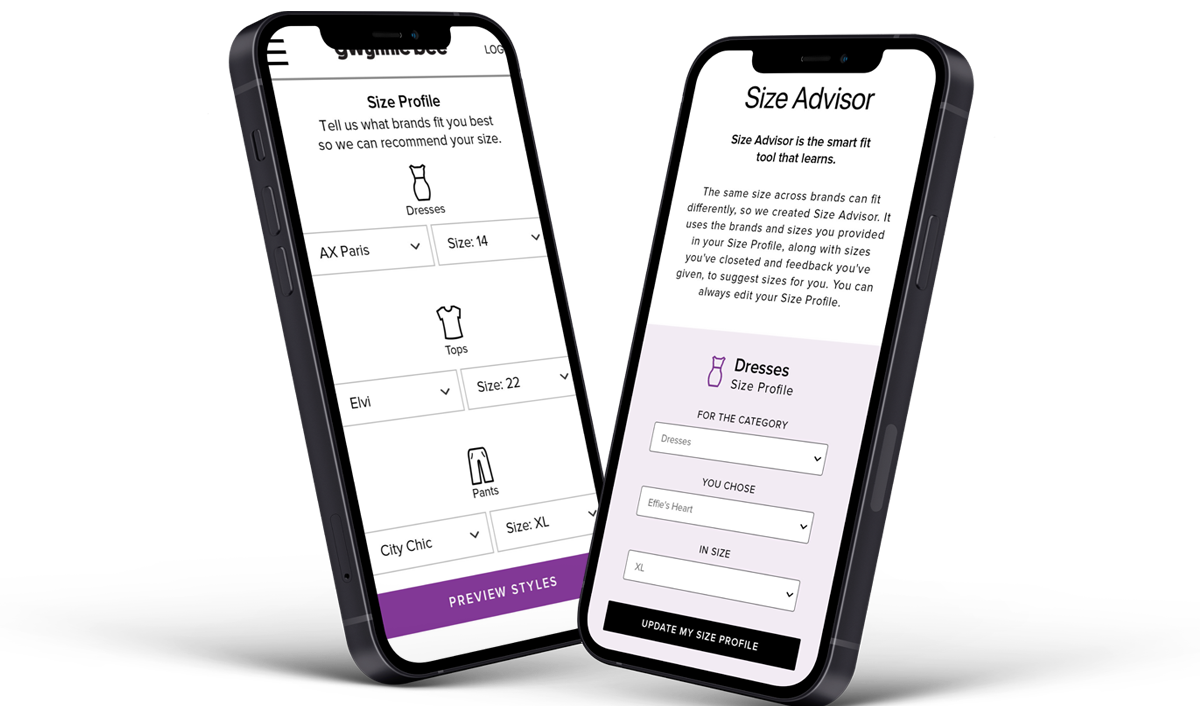
Cross-functional AI initiative transforming garment fit discovery for subscription-based clothing rental platform, delivering measurable business impact through strategic UX.
Skim Summary
The problem. At a plus size fashion subscription service, members couldn’t predict fit across hundreds of unfamiliar brands. Bad fit didn’t just hurt conversion. It killed the value of the subscription itself.
What I did. Designed an AI driven fit personalization system across a 24 month, 4 phase rollout, partnering closely with PM, Data Science, and Engineering. Phasing was a strategic call: it let the model learn before it had to perform.
The outcome. 16 to 38% progressive lift across the funnel. 100% member adoption. The return data became leverage with garment vendors, unlocking better wholesale pricing.
Why it matters. This wasn’t a recommendation engine project. It was a marketplace trust problem in a chronically underserved market, solved by sequencing how data was collected, not just what was built.
The Business Problem
Gwynnie Bee was a subscription service for plus size women. Members didn’t buy garments. They subscribed to try them, wear them, and decide what to keep.
That model only worked if garments fit.
For the plus size community, fit isn’t a UX nicety. It’s a category that fashion has chronically underserved. Most members had spent years not being able to play with style the way smaller sized women could. Gwynnie Bee’s promise was that they finally could.
But the catalog ran across hundreds of brands, and sizing was wildly inconsistent across them.
- Every garment that didn’t fit was a garment a member couldn’t wear in her subscription.
- Every “didn’t fit” outcome chipped away at the reason to subscribe in the first place.
- The training data to build an AI fit model didn’t exist yet.
We were starting from a blank slate.
Role & Team
My Role:
- UX Strategy, Design, Research lead
My Team & Partners:
- Product, Engineering, Data Science
Timeline: 24-Month Phased Rollout
- Phase 1: Foundation Building
- Phase 2: Data Intelligence Enhancement
- Phase 3: Acquisition Flow Integration
- Phase 4: Comprehensive Fit Ecosystem
What I Saw That Others Didn’t
The conventional framing was “build a recommendation engine.” My read was different.
The recommendation engine was the easy part. The hard part was getting members to feed it honest fit data without feeling surveilled, and sequencing the build so the model wasn’t asked to perform before it had learned.
Here’s how the insight actually came together:
I started with a conversation with a PM about how to improve fit. We sketched concepts. We talked through ideas. Nothing was landing.
Then we brought in our Data Science lead.
That’s where the AI and machine learning approach came from. She named it. We then brainstormed the ideal end state, and immediately realized the ideal was way too overwhelming. It would never ship.
So we did the only thing that would actually work: broke it into phases.
Phasing wasn’t a project management convenience. It was a strategic decision across three dimensions:
- What Data Science needed to build training datasets in the right order
- What Engineering could realistically build without compromising the existing platform
- What members could absorb without feeling overwhelmed by a sudden new system
The phases were the strategy.
What I Did
I was responsible for UX design and research for the full Fit Engine. I worked as part of a four legged stool with PM, Data Science, and Engineering. None of the phases would have worked without all four functions making decisions together.
PHASE 1: Foundation Building on the PDP
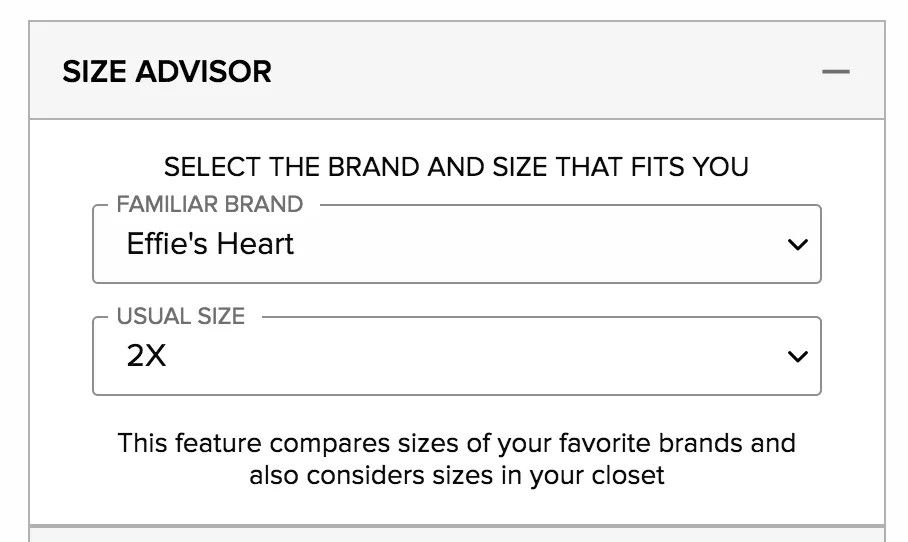
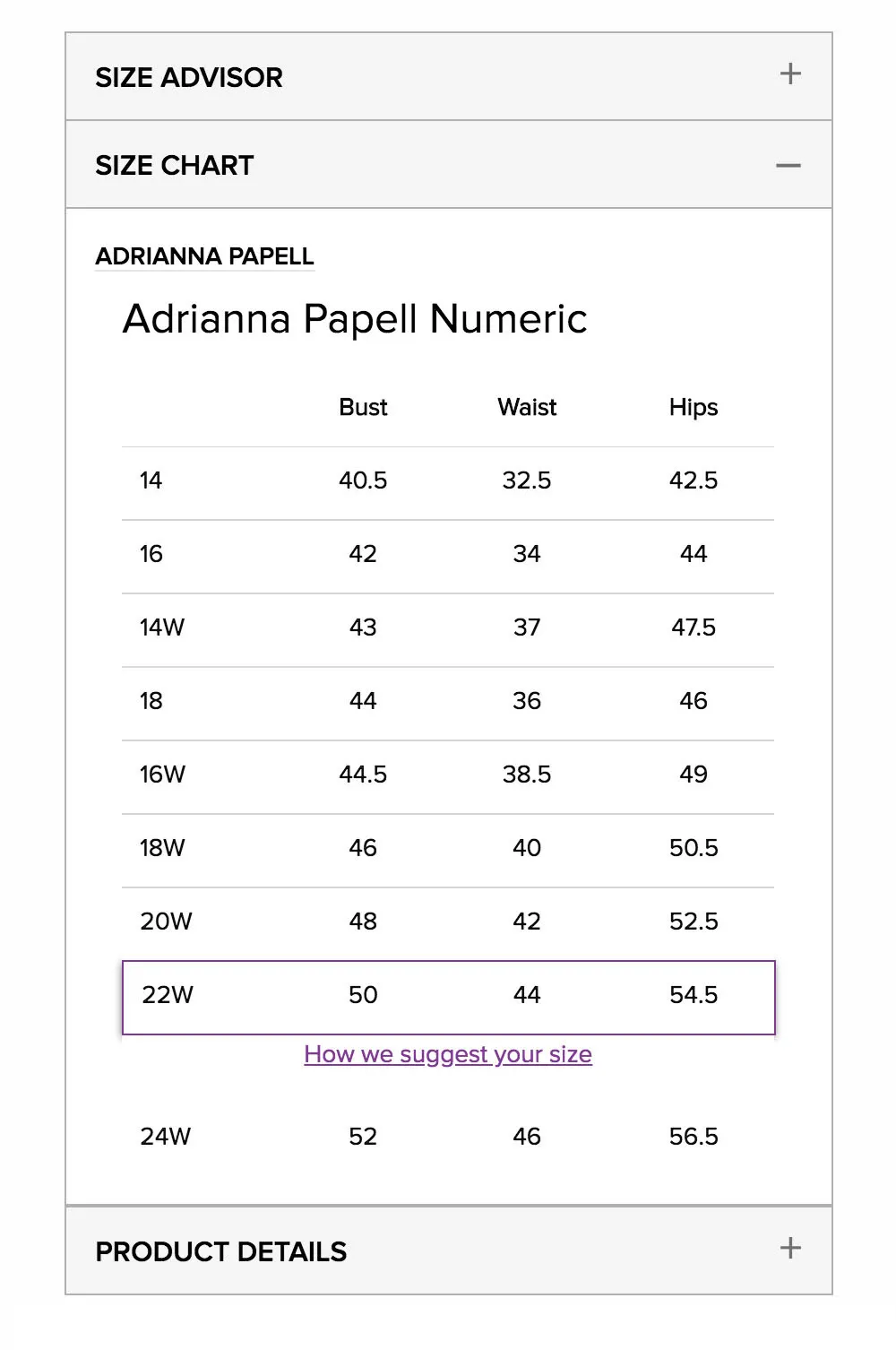
The first member touchpoint. A simple side by side size chart comparison tool placed on product detail pages, available to active members.
A member selected a brand and size she already knew fit her well from a dropdown. She got a recommendation for the brand she was considering.
Low risk. No training data required. A starting point. This generated the first real fit comparison data.
PHASE 2: Data Intelligence Enhancement & Capturing Return Data
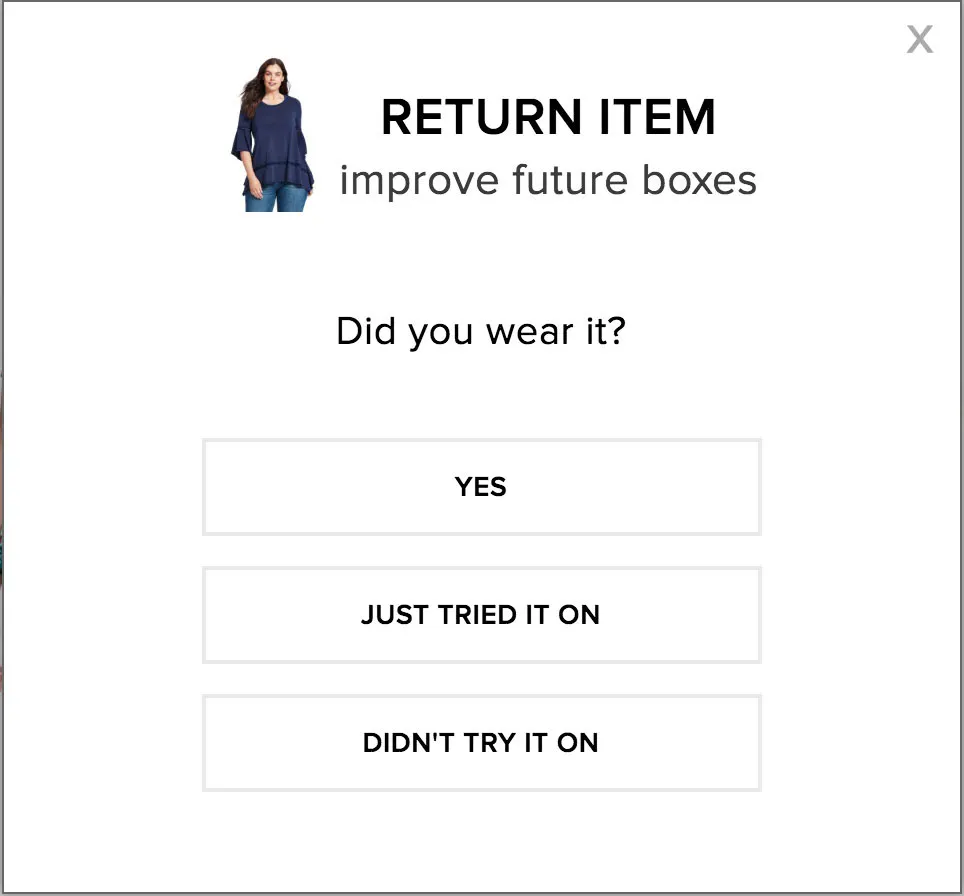
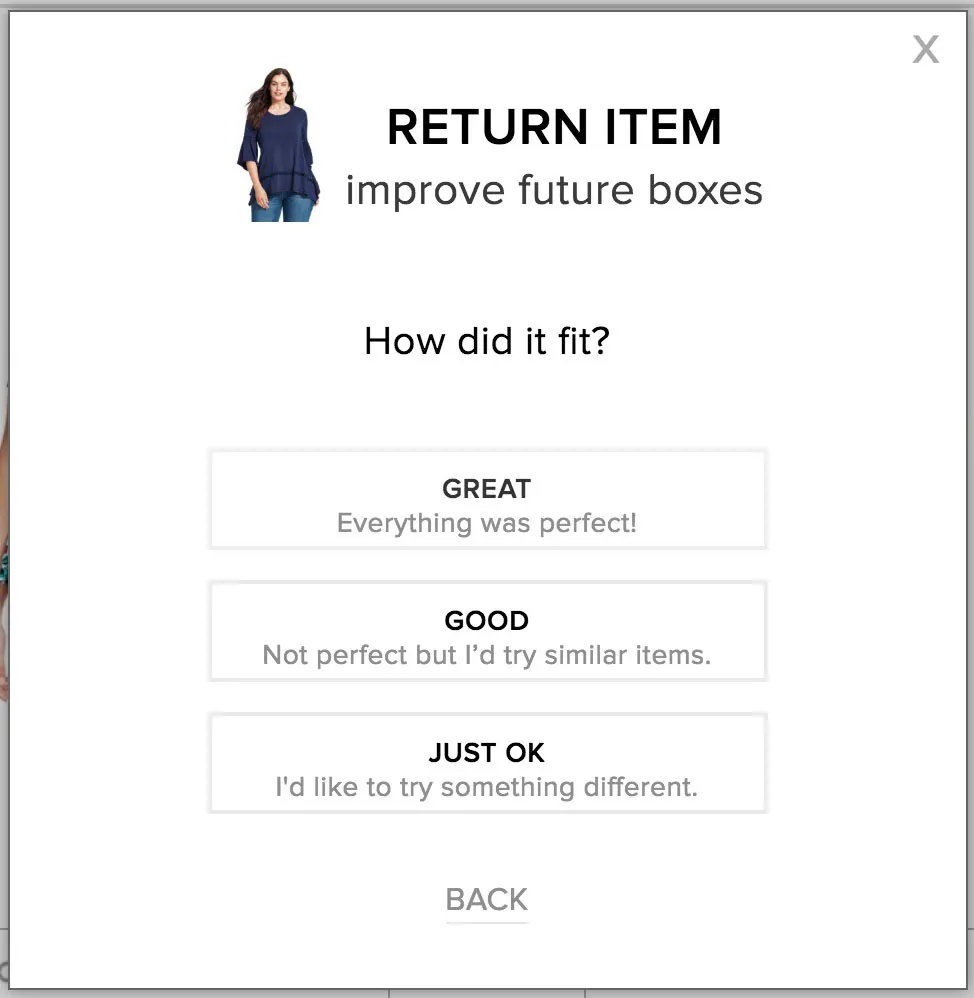
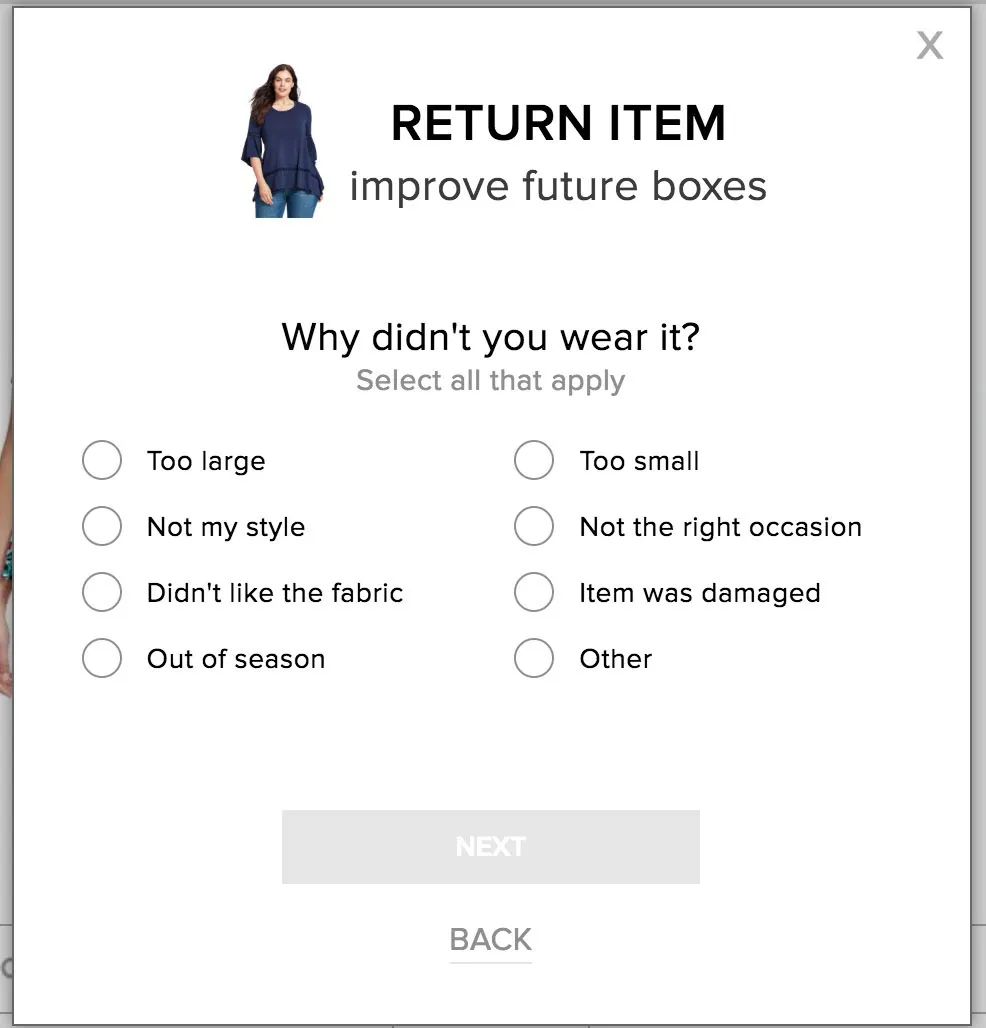
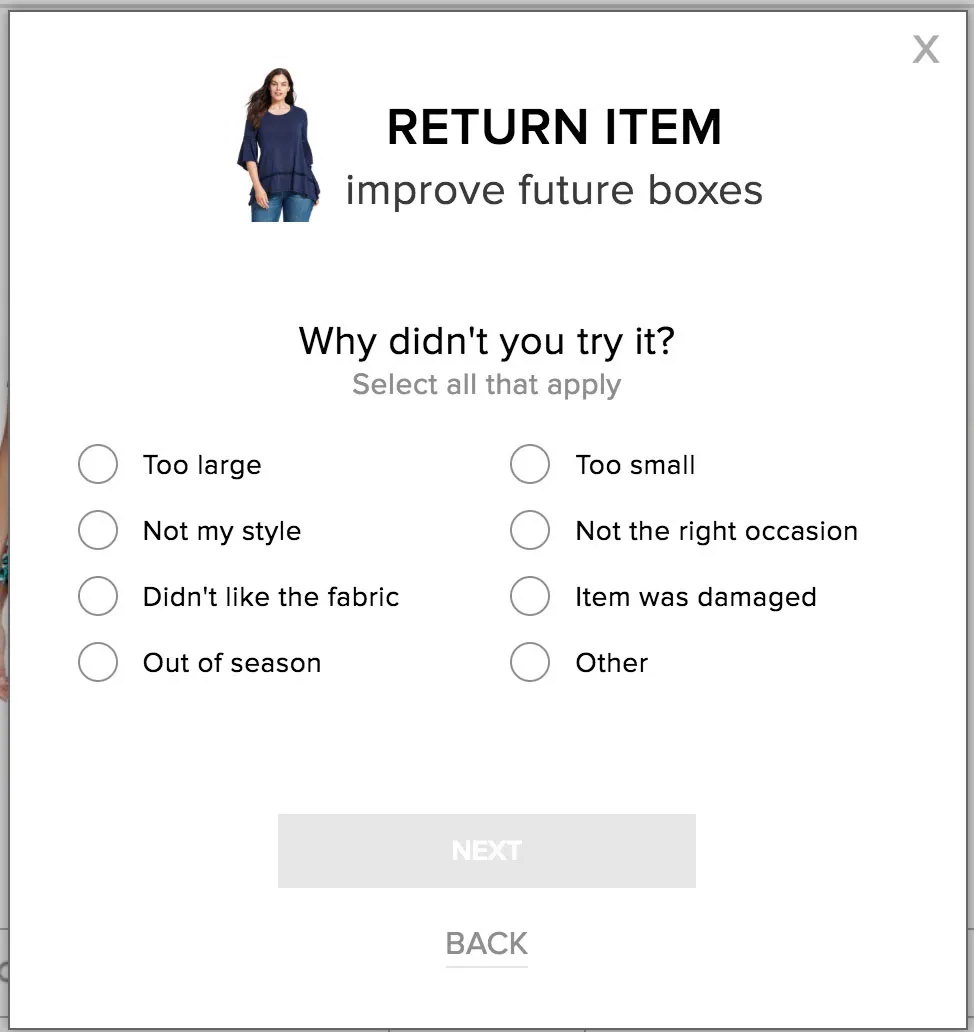
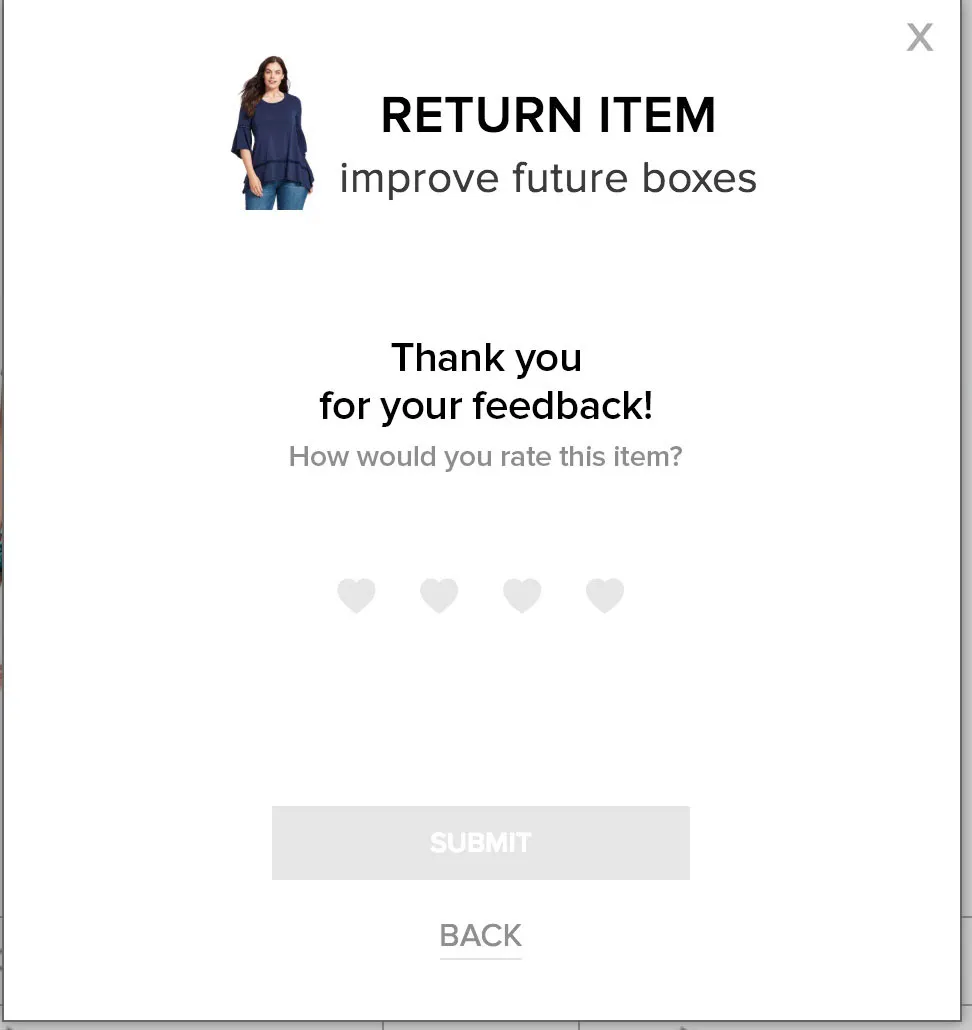
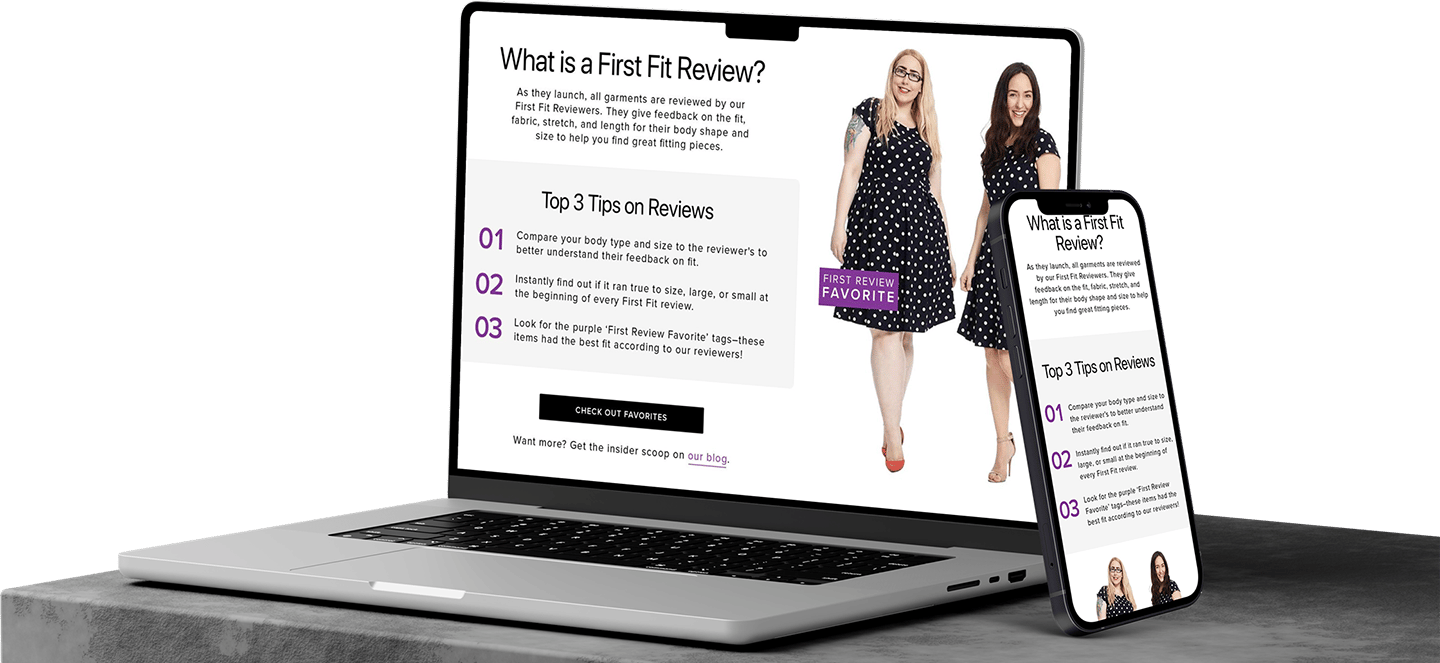
I redesigned the return notification flow to capture structured fit feedback in both directions: what fit well, what didn’t, and where it didn’t fit. A series of modals that got more granular on fit that we adjusted and refined with A/B testing.
Eventually, it let us compare the actual fit failure points across brands, not just whether a garment worked.
Two design moves made this phase do more than train the model:
- The fit data became a B2B asset. We could feed unprecedented quality fit feedback back to manufacturers, who had never seen the quantity of data like it.
- The return notification became an aligned incentive. If a member submitted her fit feedback, her next subscription box shipped before we received the current one back. She got faster turnaround. We got the data.
This was behavioral design in service of data quality. It worked because the incentive was real.
PHASE 3: Acquisition Flow Integration
Once the model had enough data to make confident recommendations, we made the size quiz a required step in account creation.
- Every new member arrived with a fit profile from day one.
- The quiz fed the recommendation surface on the PDP, so a member’s first browsing experience already had personalized sizing.
- The cold start problem was eliminated.
PHASE 4: Comprehensive Fit Ecosystem
A dedicated landing page where members could:
- Adjust their Size Advisor profile directly (lost weight? Gained weight? Found a new brand that fit perfectly?)
- Learn how to take their measurements properly
- Browse a Fit FAQ built from real member questions
- Self-serve their way into better recommendations, even before enough returns had refined her profile
This gave members agency over the model. The AI was learning from her returns, but she could also teach it directly.
- Throughout
- Extensive qualitative research. Stakeholder interviews and member surveys to validate questions and design before each phase shipped.
- A/B tested every phase with multiple design variants, executed with Engineering and PM partners.
The Impact
- 16 to 38% progressive lift across the funnel, measured against the most relevant metric for each phase.
- 100% of the member base eventually had a Size Advisor profile.
- The return data became wholesale pricing leverage. Vendors wanted the unprecedented fit feedback. We used that demand to negotiate better garment pricing.
- 16–38%
- Progressive lift improvement across all phases
- ↑ CSAT
- Sustained customer satisfaction improvements
- 100%
- Eventual tool adoption across entire member base
- Proved test-and-learn
- Strategy to cross-functional teams, proving UX as thought partner
- + Data driven
- Iteration cycles maximized algorithmic performance
- ↑ Member value
- Stakeholder interviews validated value proposition
- A/B testing
- Extensive A/B testing confirmed optimal experience design
- ↑ Engagement
- Enhanced product engagement through pre-selected sizing
For users: more members reported positive fit, kept and purchased more garments, returned fewer, and, in their own words, gained the confidence to try patterns, brands, and styles they never would have tried in regular e-commerce. The fit engine gave them confidence that the garment would fit. The subscription gave them confidence to take the risk.
For the business: negative returns decreased. Subscription value increased because more garments in the box were wearable. Vendor relationships became negotiable in a way they hadn’t been before, because we held data they wanted.
I’m ready to drive similar transformational results for your organization through strategic UX leadership and AI innovation.